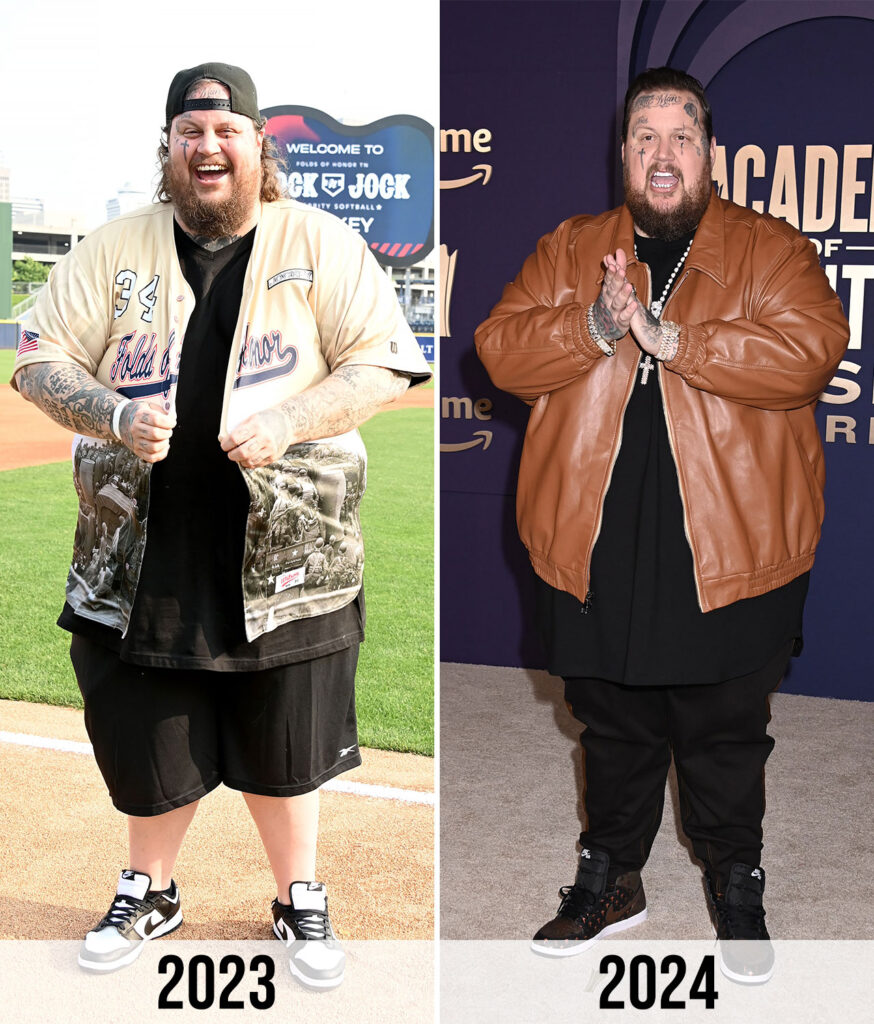
After Dropping 275 Pounds, Jelly Roll Shares Surprising Insights About His Journey
For the past five years, Jelly Roll, born Jason DeFord, has undertaken one of the most remarkable transformations in modern celebrity health history.
Once weighing over 540 pounds, the 41-year-old rapper, singer, and songwriter now maintains a steady weight of 265 pounds, having shed more than 275 pounds.
Remarkably, he achieved this transformation without relying on popular GLP-1 medications such as Ozempic or Wegovy, emphasizing a journey rooted in discipline, self-awareness, and sustainable lifestyle changes.
In interviews and public appearances, Jelly Roll has been candid about the fact that his transformation was not motivated by superficial goals. “It’s not about quick fixes or shortcuts,” he explained. “This was about reclaiming control over my health, my life, and my relationship with food. I wanted to prove that real, lasting change is possible if you do the work.”
His story, featured in the Men’s Health Winter 2026 cover story, is both inspirational and instructive, offering a roadmap for individuals struggling with severe obesity or food addiction.
But the narrative is far more nuanced than a simple before-and-after tale—it is a story of struggle, self-reflection, emotional challenges, and the sheer determination required to confront long-standing patterns of self-sabotage.
The Starting Point: Confronting a Life-Threatening Reality
By 2020, Jelly Roll’s weight had reached critical levels, signaling severe health risks. At times, he admitted, his scale stopped registering numbers above 520 pounds.
Every aspect of daily life—from climbing stairs, bending to tie his shoes, to even getting out of bed—had become monumental challenges. “I felt trapped inside my own body,” he said. “I couldn’t move freely, couldn’t live normally, and even small tasks felt impossible.”
A key factor driving his weight gain was a serious food addiction. For years, he had relied on food as a coping mechanism, eating impulsively and often consuming high-calorie, low-nutrient foods to escape stress, emotional pain, and boredom.
“It wasn’t just overeating,” he explained. “It was about using food to numb myself from emotions I didn’t know how to process.”
Unlike many people who attempt rapid weight loss, Jelly Roll began by addressing the mental and emotional root of his behavior. He sought therapy, treating his compulsive eating in a way similar to addressing substance abuse.
This approach emphasized understanding the psychological triggers and emotional underpinnings behind his eating habits, rather than just focusing on what he ate.
Debunking GLP-1 Medication Myths
As news of Jelly Roll’s weight loss spread online, speculation quickly arose about whether he had relied on GLP-1 medications like Ozempic or Wegovy.
Addressing these rumors directly, Jelly Roll clarified that while he briefly experimented with GLP-1 therapy, he stopped after just two weeks due to severe acid reflux and digestive discomfort.
“I didn’t want an asterisk next to my name,” he explained. “I wanted to show people that lasting change comes from discipline, understanding your body, and committing to real work. Medications can be useful for some, but for me, this was about creating sustainable habits and a healthy lifestyle.”
This transparency helped fans understand that his success was earned through effort, education, and perseverance, not shortcuts. It also sparked discussions among followers about the importance of long-term wellness over quick fixes in the weight-loss journey.
Medical Discoveries: Understanding the Body
A critical part of Jelly Roll’s transformation involved medical guidance and extensive testing. In 2021, detailed blood work revealed several health issues:
Extremely high insulin levels, contributing to fat storage and metabolic imbalance
Elevated cholesterol and A1C, signaling prediabetes and a high risk for diabetes complications
Severely low testosterone, measuring just 57 ng/dL, far below the normal range for men his age
Medical professionals guided him to correct these issues strategically. He was prescribed metformin to regulate insulin and triglycerides and underwent hormone therapy to correct testosterone deficiencies.
The combination of medical intervention, therapy, and lifestyle changes created the foundation for his sustainable transformation.
Lifestyle Overhaul: Food, Fitness, and Mental Resilience
Central to Jelly Roll’s journey was a complete redefinition of his relationship with food. Over time, he transitioned from high-calorie processed foods to nutrient-dense whole foods, incorporating lean proteins, complex carbohydrates, and abundant vegetables.
Meal timing and portion control became essential tools in regulating energy levels, controlling hunger, and supporting metabolic health.
Exercise was gradually introduced, initially with short walks, stretching, and light resistance training. As his endurance and strength improved, he expanded his routine to include more rigorous workouts, building muscle definition, flexibility, and overall vitality.
Equally significant was his work on mental resilience. Through therapy, mindfulness, and reflection, Jelly Roll developed coping mechanisms to resist emotional eating and to respond to stress without relying on food. He emphasized the importance of understanding one’s triggers, being honest with oneself, and maintaining accountability throughout the journey.
By 2025, five years into his transformation, Jelly Roll described his new life as “living in an entirely different world.” Tasks that once felt impossible—walking long distances, bending, lifting, or even playing with his children—were now accessible and enjoyable.
His posture, energy levels, and confidence all improved dramatically, marking a complete reclamation of his body and life.
Jelly Roll’s incredible journey was chronicled in the documentary “A Year for a Life,” released in conjunction with Men’s Health Winter 2026 coverage. The film captures the physical, emotional, and mental challenges of losing over 275 pounds in a sustainable, health-focused way.
Viewers witness the early struggles, including weight-loss plateaus, moments of self-doubt, and the intense emotional labor required to overcome deep-seated food addiction. The documentary emphasizes that transformation is rarely linear; it’s a continuous process of adaptation, reflection, and persistence.
Nutritionists, medical professionals, and wellness experts featured in the documentary highlighted the importance of addressing metabolic health, hormone imbalances, and mental well-being simultaneously.
They emphasized that for long-term results, weight loss cannot be separated from emotional regulation, therapy, and lifestyle consistency. Jelly Roll’s journey demonstrates that sustainable health changes are holistic, integrating both mind and body.
Surgical Intervention: Addressing Excess Skin
A natural byproduct of massive weight loss is excess skin, which can limit mobility, cause discomfort, and affect confidence. Jelly Roll prepared for a surgical procedure to remove this skin, not merely for cosmetic reasons but to enhance functional comfort and physical freedom.
“The skin can be a reminder of the old struggle,” he explained. “It gets in the way of moving freely, exercising comfortably, and feeling like my body belongs to me again. This surgery is just another step in continuing the journey I’ve already started.”
Preoperative preparation included maintaining stable weight, following a nutrient-rich diet, and optimizing cardiovascular health to minimize risks. Post-surgery, Jelly Roll anticipated improved mobility, flexibility, and confidence, further solidifying his transformation.
Mental Health and Emotional Resilience
Equally important as his physical changes was Jelly Roll’s focus on mental health. Therapy became an essential pillar of his success, helping him identify emotional triggers for overeating, manage stress, and develop healthier coping mechanisms.
He describes the process as life-altering, noting that mental clarity and emotional balance were just as critical as physical strength. Mindfulness, reflection, and consistent self-accountability became daily practices, ensuring that the progress he made was long-term and sustainable.
By addressing the psychological roots of his habits, Jelly Roll avoided common pitfalls that often accompany dramatic weight loss, such as emotional rebound eating or loss of motivation. He emphasizes that true transformation must include the mind as well as the body, making the journey complete and authentic.
Public Response and Impact
The public response to Jelly Roll’s transformation has been overwhelmingly positive. Fans celebrated not only his physical change but also his transparency about the emotional challenges involved. Social media quickly became a platform for inspiration, with thousands of messages praising his honesty, vulnerability, and dedication.
“I started taking small steps because of him,” one fan wrote. “Seeing his story gave me the courage to seek help for my own struggles with food and mental health.” Another follower shared, “It’s not just weight loss—it’s about reclaiming your life. Jelly Roll shows us how to do that.”
Jelly Roll’s story resonates particularly in an era dominated by overnight weight-loss transformations. Unlike rapid, unsustainable results promoted online, his journey highlights that real change is gradual, intentional, and rooted in understanding your body, emotions, and habits.
Lessons Learned: Patience, Accountability, and Realistic Goals
One of the most significant lessons Jelly Roll emphasizes is patience. He notes that progress is rarely linear and that setbacks are an inevitable part of any meaningful journey. By focusing on incremental improvements—one meal, one walk, one choice at a time—he cultivated habits that support lifelong health.
Accountability was another cornerstone. By being honest with himself and sharing his story publicly, he held himself to a higher standard, motivating himself to maintain consistency even when results were slow to appear.