
The “Thinnest Dog Ever Seen Alive” Has Recovered and Found a Loving Family
The “Thinnest Dog Ever Seen Alive” Has Recovered and Found a Loving Family When rescuers first encountered the dog, many…
19/01/2026 16:25
The “Thinnest Dog Ever Seen Alive” Has Recovered and Found a Loving Family
When rescuers first encountered the dog, many believed they were already too late.
Her body was shockingly thin, her ribs protruding sharply beneath stretched skin, her muscles almost entirely wasted away. Lying motionless, she appeared more like a fragile skeleton than a living animal. Even experienced rescue workers hesitated, unsure whether she would survive the next few hours. Yet, against all expectations, she was still breathing. And in that faint breath began one of the most remarkable recovery stories animal welfare workers would ever witness.
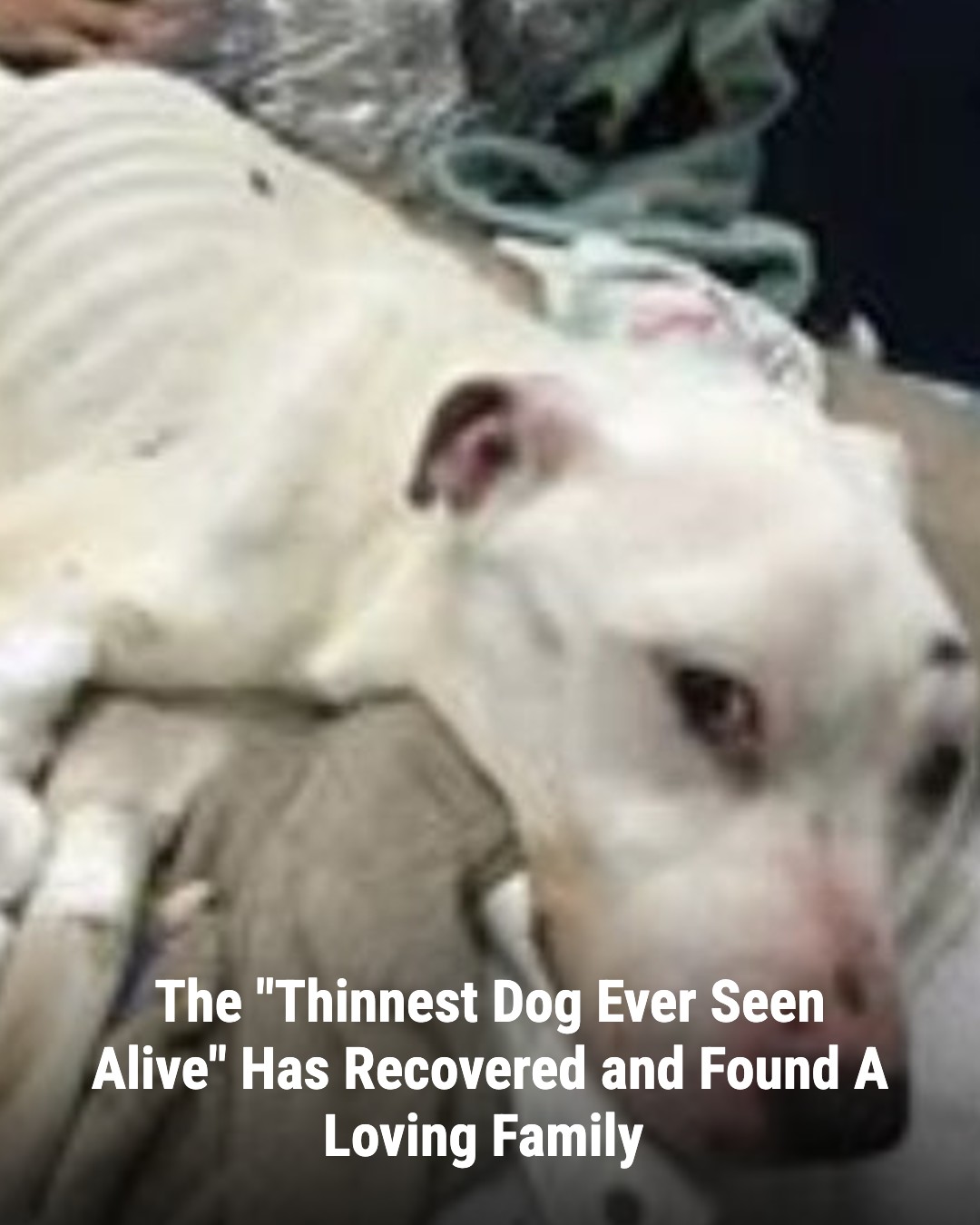
The dog was found collapsed in a neglected area, barely responsive to touch or sound.
Witnesses later described the moment as haunting. Her eyes were open, but dull, lacking the alertness typically seen even in injured animals. Every movement required visible effort. Her limbs trembled under the strain of simply existing.
Extreme emaciation of this level is rare.
Veterinarians who later examined her stated that her condition reflected prolonged starvation combined with severe neglect. This was not the result of a missed meal or temporary hardship. It was the outcome of weeks, possibly months, without adequate nutrition or care.
At the time of rescue, her body weight was far below what would be considered survivable for a dog of her size. Many quietly prepared themselves for the possibility that comfort care might be the only option.
The dog was rushed to an emergency veterinary clinic where immediate stabilization became the priority.
She was severely dehydrated, hypothermic, and too weak to stand. Feeding her normally would have been dangerous. In cases of extreme starvation, reintroducing food too quickly can cause refeeding syndrome, a potentially fatal metabolic reaction.
Every step of treatment required precision and restraint.
She was given fluids slowly, electrolytes were carefully balanced, and nutrition was introduced in tiny, controlled amounts. Pain management was addressed, not only for physical discomfort but also to reduce stress, which can be fatal in such fragile states.
Veterinary staff described the atmosphere as tense yet hopeful. Each small sign—a swallow, a slight tail movement, a change in breathing—was celebrated as a victory.
Medical examinations revealed the full extent of the damage.
Her organs had begun to slow from lack of nourishment. Muscle mass was almost entirely depleted. Pressure sores had formed from lying in one position for too long. Even her immune system was barely functioning, leaving her vulnerable to infections.
Despite this, her will to live remained evident.
When gently spoken to, her eyes followed movement. When touched carefully, she did not pull away. These subtle responses told veterinarians that she had not given up.
Such resilience is not something medicine can create. It exists within the animal, waiting for a chance to be supported.
Recovery did not happen quickly, nor was it dramatic.
Progress came in increments so small they were measured day by day, sometimes hour by hour. Weight gain was slow and carefully monitored. Muscles had to relearn how to function. Simple actions—lifting her head, shifting her legs, sitting upright—became milestones.
Emotional recovery followed a similar pattern.
At first, she remained withdrawn, conserving energy and observing quietly. Gradually, she began to respond to human presence. A soft gaze turned into eye contact. Stillness turned into gentle tail movements.
Veterinary staff and volunteers took turns sitting with her, offering calm companionship. For a dog who had likely known only hunger and neglect, these moments of quiet kindness were transformative.
As weeks passed, the dog’s appearance slowly changed.
Her body began to fill out, not rapidly, but enough to show progress. Her coat, once dull and sparse, started to regain some softness. The hollow look in her face softened as her cheeks filled slightly.
More importantly, her personality began to emerge.
She showed curiosity. She leaned into touch. She responded positively to gentle voices. These signs confirmed what rescuers had hoped: she was not just surviving, she was healing.
Veterinarians emphasized that her recovery was as much about consistent care as it was about patience. There were setbacks—days when she seemed weaker, moments when appetite declined—but the overall trajectory moved forward.
As images of her initial condition circulated, public reaction was intense.
Many referred to her as the “thinnest dog ever seen alive,” a label that reflected shock more than exaggeration. Along with concern came anger and sorrow, as people questioned how an animal could reach such a state unnoticed.
Animal welfare organizations used her story as a reminder.
Extreme neglect does not occur in isolation. It happens when warning signs are ignored, when communities lack resources, or when responsibility is abandoned. Starvation at this level is preventable.
Yet rescuers were careful to keep the focus on recovery rather than blame. The goal was not outrage, but awareness.
Once the dog was stable, discussions turned toward her long-term future.

She would require ongoing medical monitoring, a carefully managed diet, and an environment free from stress. Not every home could meet those needs.
Finding the right family mattered more than finding any family.
Potential adopters were screened carefully. Experience with rescue animals, patience, and understanding of trauma-informed care were essential requirements.
During this period, the dog continued to thrive. She gained strength, began walking more confidently, and displayed gentle affection toward those she trusted.
The moment she met her future family marked another turning point.
They approached slowly, allowing her to set the pace. She responded with calm curiosity rather than fear. There was no hesitation, no withdrawal. It was as if she recognized safety when she saw it.
Adoption did not mark the end of her journey, but a new chapter.
Her new home offered warmth, routine, and security. Regular meals replaced hunger. Soft bedding replaced cold ground. Consistent care replaced uncertainty.
Her adopters understood that healing would continue long after adoption papers were signed. Trust would deepen over time. Strength would return gradually.
Today, the dog is almost unrecognizable from the fragile figure once found barely alive.
She moves with confidence, eats eagerly, and engages with her environment. Scars remain, both physical and emotional, but they no longer define her existence.
Her transformation stands as proof of what compassionate intervention can achieve.
With timely medical care, patience, and love, even the most severe cases of neglect can have positive outcomes.
Veterinarians involved in her recovery emphasize that her survival was not guaranteed. Many animals in similar conditions do not make it. That reality makes her recovery even more significant.
This is not just a story about one dog.
It is a reflection of systemic issues in animal welfare and the power of responsible action. It highlights the importance of early intervention, community awareness, and accessible veterinary resources.
The “Thinnest Dog Ever Seen Alive” Has Recovered and Found a Loving Family When rescuers first encountered the dog, many…

Senior Dog Ajax Finds Love Again After Being Found Guarding Deceased Owner When authorities entered the quiet home, they expected…
Emaciated Dog Suffering From Severe Skin Disease Found in Garbage Dump By the time rescuers reached the edge of the…

I didn’t expect a text from my dad to ruin my week or to find myself crashing a seven-year-old’s birthday…

Two years after I saved a woman’s life at 35,000 feet, I was at my lowest, struggling to make ends…

I walked into court expecting to lose my little daughter. Instead, she spoke seven words that changed everything. I never…