Tiny Goat Rejected At Birth Was Adopted By A Cat — An Unlikely Animal Friendship That Melted Hearts
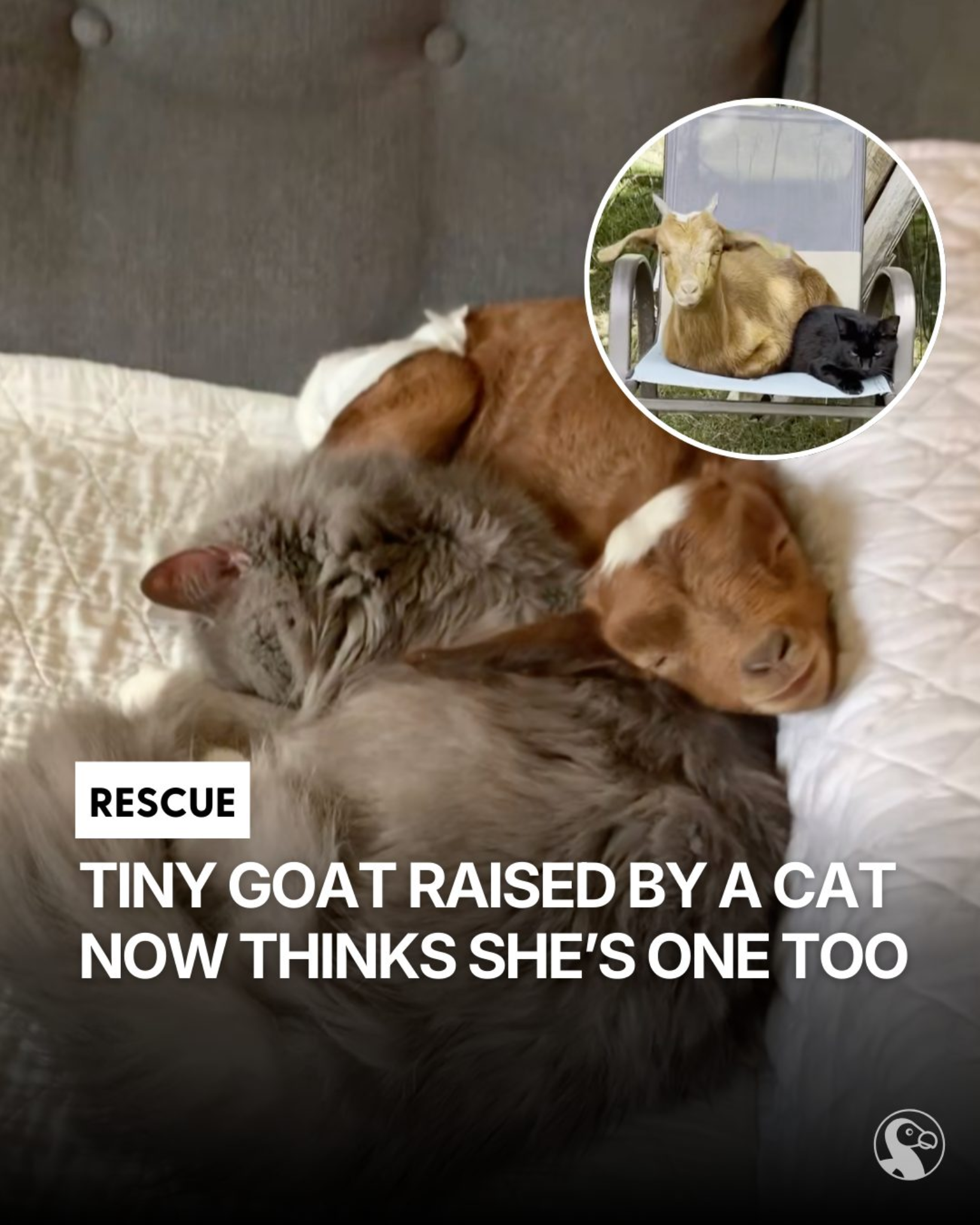
A newborn goat rejected by her mother found comfort in the most unexpected place — an older house cat. This heartwarming unlikely animal friendship proves love knows no species.

Tiny Goat Rejected At Birth Finds Love In The Most Unexpected Place
She was only five days old.
Barely two pounds.
Too small to survive alone.
When Lily the baby goat was rejected by her mother shortly after birth, no one knew if she would make it. But what happened next turned her heartbreaking beginning into one of the most touching unlikely animal friendships the sanctuary had ever seen.
Instead of fading away, Lily found comfort in an unexpected caretaker — an older house cat named Bean.
And from that moment on, she decided she wasn’t a goat at all.
She was a cat.
A Fragile Beginning: Why Some Baby Goats Get Rejected
Goat rejection, while heartbreaking, isn’t unheard of in farm environments. Sometimes mother goats reject their newborns due to stress, illness, inexperience, or instinctual survival behaviors.

In Lily’s case, she was extremely small at birth — underweight and fragile. Sanctuary workers noticed quickly that she wasn’t being nursed. She was cold. Weak. Alone.
Newborn goats rely heavily on their mothers during the first days of life. Without warmth, milk, and protection, survival becomes difficult.
That’s when the sanctuary stepped in.
They brought Lily inside.
They gave her blankets.
But what they didn’t expect was who would volunteer for the job next.
The Cat Who Stepped In
Bean wasn’t supposed to be a foster parent.
He was an older resident house cat who typically preferred quiet naps and sunny windowsills. But the moment Lily was placed in a warm corner inside the sanctuary house, Bean walked over and curled up beside her.
No hesitation.
No fear.
Just instinct.
Sanctuary staff watched in disbelief as the tiny goat relaxed for the first time. She pressed her body against Bean’s fur, mimicking the behavior of a kitten seeking warmth from its mother.
Bean stayed.
Through bottle feedings.
Through late-night checks.
Through her weakest days.
And slowly, Lily grew stronger.
When A Goat Starts Acting Like A Cat

Something remarkable happened during Lily’s recovery.
She didn’t just bond with Bean.
She copied him.
She followed him around the house.
She tried to squeeze into small cat beds.
She curled into tight little circles when she slept.
Instead of spending time with other goats outdoors, Lily preferred lounging near the barn cats.
Even after she was strong enough to move freely, she kept choosing feline company over her own species.
Sanctuary workers began joking that Lily had an identity crisis.
But in reality, what she experienced was imprinting — a phenomenon where young animals form strong attachments to the first caregiver who provides comfort and security.
For Lily, that caregiver wasn’t a goat.
It was a cat.
The Science Behind Cross-Species Bonds
Unlikely animal friendships aren’t just adorable — they’re backed by behavioral science.
When animals experience early-life stress or separation, they often attach deeply to any consistent source of comfort. The brain doesn’t categorize species the way humans do. It responds to safety, warmth, and repetition.
Studies in animal behavior suggest that:
-
Young mammals imprint quickly during vulnerable stages.
-
Physical closeness reduces stress hormones.
-
Cross-species bonds can be just as emotionally significant as same-species bonds.
Lily didn’t see Bean as “different.”
She saw him as family.
Growing Up — But Never Growing Apart
As Lily matured, she naturally became larger and stronger. Eventually, she transitioned back to spending more time outdoors.

But something never changed.
She still sought out chairs instead of hay piles.
She still gravitated toward barn cats.
She still curled beside Bean whenever she could.
Even now, when she’s fully grown, visitors often find her lounging in places that make no sense for a goat — perched near windows, resting on patio furniture, or squeezed into shaded corners usually claimed by cats.
In her mind, she isn’t different.
She’s just part of the group.
Why Stories Like Lily’s Matter
In a world saturated with distressing news, stories like Lily and Bean’s remind us of something essential:
Connection doesn’t require similarity.
It requires presence.
The idea that love is limited by species is a human construct. Animals, in their simplicity, often demonstrate something purer — attachment based on comfort and care.
Lily survived because someone showed up.
Bean didn’t analyze the situation.
He didn’t question biology.
He simply stayed.
The Emotional Power Of Unlikely Animal Friendships
Stories of cross-species friendships consistently go viral for one reason: they challenge our expectations.
A goat and a cat aren’t supposed to bond.
They don’t share instincts, sounds, or social hierarchies.
And yet, when survival and comfort enter the picture, those differences disappear.
These stories resonate deeply because they mirror human experience:
-
Adoption
-
Found family
-
Healing after rejection
-
Belonging despite differences
Lily’s journey is more than cute content.
It’s emotional reassurance.
From Rejected To Radiant
If you compare photos from Lily’s first days to now, the transformation is striking.
Once fragile and barely able to stand, she’s now energetic, healthy, and confident.
But perhaps the most powerful change isn’t physical.
It’s behavioral.
She approaches the world with security — a sign she formed a stable early attachment.
That attachment began with a cat.
What We Can Learn From Lily And Bean
-
Love isn’t limited by labels.
-
Comfort can come from unexpected places.
-
Early kindness can change the trajectory of a life.
-
Family isn’t always biological.
And perhaps most importantly:
Sometimes the smallest acts — like curling up beside someone who’s alone — can mean everything.
A Very Big, Very Loved Cat
Today, Lily may technically be a goat.
But she lounges like a cat.
She naps like a cat.
She socializes like a cat.
And when Bean curls beside her, she melts into him the same way she did at five days old.
In her world, species never mattered.
Only love did.